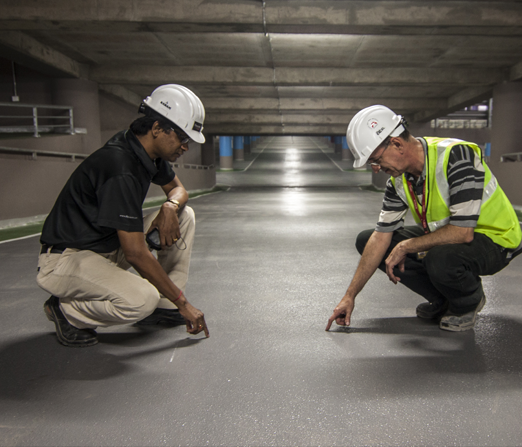
There are many types of waterproofing materials. Some of the best and most common include; Polyurethane, Cementitious Coating, EPDM Rubber, Rubberized Asphalt, Thermoplastic, Bituminous Membrane, and PVC Waterproofing Membrane.

Existing waterproofing treatment shall be removed till RCC slab is exposed, surface of the slab shall then be inspected. If any honeycombing or crack are observed then that will be treated as per specification of treating cracks filling.
Entire slab surface shall be then grouted with cement slurry made with 1 part cement and 0.60 part of water. This type of grouting is surface grouting only and not deep into the body.
The slurry shall be spread over the slab surface and brushed into concrete using squeegee, brooms and brush. The surface shall them be covered with cement and clean sand mix in portion of 1:4 by volume with a waterproofing plasticizer added at recommended dosages. The thickness is about 25-40 mm. Brick shall then be laid on fresh mortar starting with the brick on edges at the central portion and gradually using smaller brick bat pieces as one goes to the rain water down take pipe side. The level should be so adjusted that an overall slope of finished Brick Bat Coba of 1:100 is achieved.
Gaps between the brick bat pieces should not be more than 20 mm. Brick Bat surface should shall then be take care for 7 days by pounding water on it for 7 days. After the curing period the top screed shall be laid in 1:4 cement sand mortar with a suitable waterproofing plasticizer and polypropylene fibers 125 grm per bag of cement, Surface shall be finished smooth and marked with tile marks at 300mmc/c both ways. The surface shall be pounded for 21 days for curing. Final slope of mm 1:100 shall be ensured. There should be no accumulation of water anywhere over the terrace.